Introduction: Understanding the Financial Aspects of Knee Replacement
When chronic knee pain begins to limit your mobility and quality of life, total knee replacement surgery can offer a path back to an active lifestyle. However, beyond the physical considerations, many patients have pressing questions about the financial implications of this life-changing procedure.
As an experienced orthopedic surgeon, Dr. Debashish Chanda recognizes that understanding the cost for total knee replacement surgery is crucial for making informed healthcare decisions. This comprehensive guide breaks down everything you need to know about the expenses associated with knee replacement—from initial consultation to long-term recovery and beyond.
Whether you're considering surgery, preparing for an upcoming procedure, or simply researching options, this article will provide clarity on what costs to expect and how to navigate the complex healthcare financing landscape.
What Is Total Knee Replacement Surgery?
Before diving into costs, it's important to understand what the procedure entails. Total knee replacement surgery (also called total knee arthroplasty) is a procedure that replaces a damaged knee joint with artificial components designed to replicate the function of a natural knee.
During the procedure, Dr. Chanda carefully removes damaged cartilage and bone from the knee joint and replaces them with specially designed metal and plastic components. These prosthetic parts recreate the surface of the joint, eliminating painful bone-on-bone contact and restoring smooth movement.
The procedure typically involves:
- Removing damaged cartilage surfaces at the ends of the femur (thigh bone) and tibia (shin bone)
- Reshaping the bone ends to properly fit the artificial implants
- Positioning metal components to recreate the joint surface
- Inserting a medical-grade plastic spacer between the metal components for smooth gliding
- If necessary, resurfacing the underside of the patella (kneecap)
[Internal link: Learn more about the total knee replacement procedure]
The Total Cost Breakdown for Knee Replacement Surgery
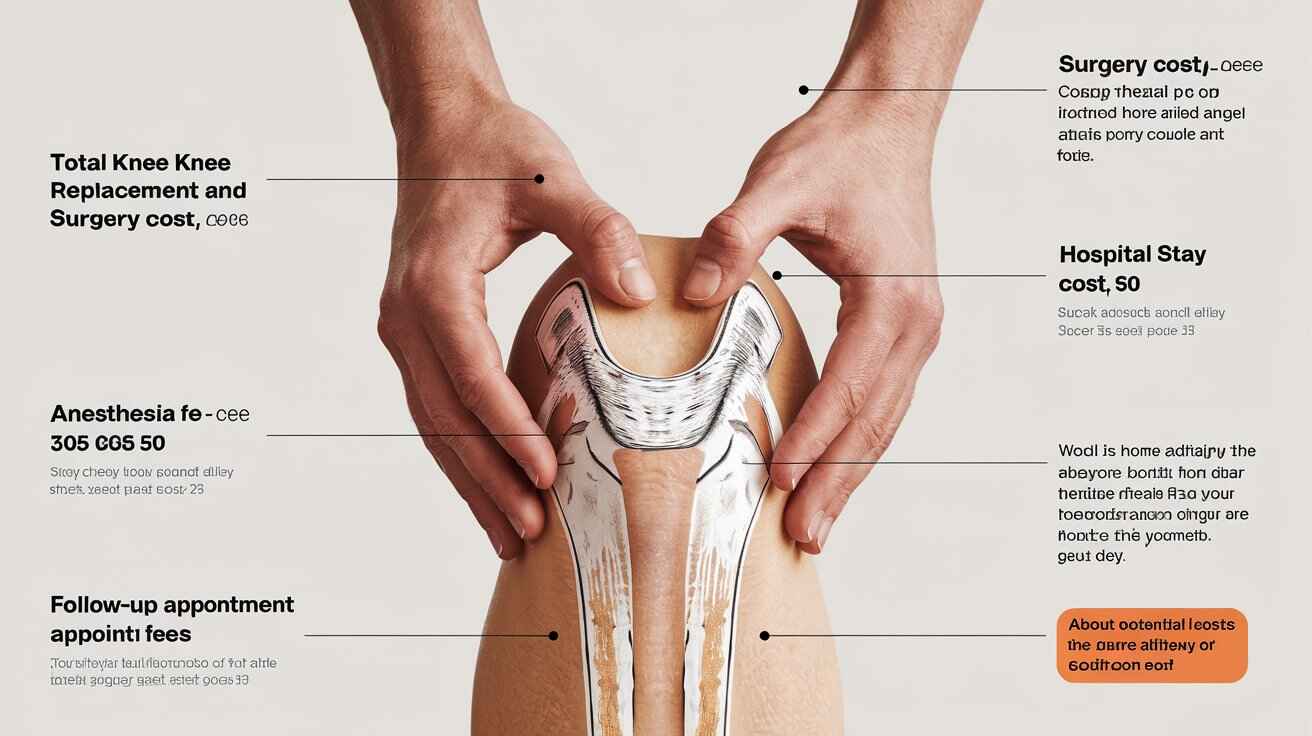
The cost for total knee replacement surgery varies widely depending on numerous factors. Let's break down the major expense categories:
Pre-Surgical Expenses
Before the actual surgery, you'll encounter several costs:
- Initial consultation: $200-500
- Diagnostic imaging: $400-3,000 (X-rays, MRIs)
- Pre-surgical testing: $500-1,500 (blood work, EKG, etc.)
- Pre-rehabilitation therapy: $50-250 per session (if recommended)
Hospital and Surgical Fees
The core expenses associated with the procedure include:
- Surgeon's fee: $5,000-15,000
- Anesthesiologist's fee: $1,000-3,000
- Hospital facility fee: $15,000-35,000
- Operating room charges: Included in facility fee
- Implant cost: $3,000-15,000 depending on type and brand
Post-Surgical Expenses
Recovery brings additional costs:
- Hospital stay: $3,000-5,000 per day (typically 1-3 days)
- Medications: $200-500 (pain management, anti-coagulants)
- Physical therapy: $50-250 per session (typically 10-20 sessions)
- Follow-up appointments: $100-300 each
- Home health assistance: $20-100 per hour (if needed)
- Mobility equipment: $100-500 (cane, walker, raised toilet seat)
Average Total Cost in the United States
When all expenses are combined, the total cost for knee replacement surgery in the United States typically ranges from $30,000 to $65,000 for a single knee. However, these figures can vary dramatically based on geographic location, healthcare facility, and individual patient needs.
Geographic Cost Variations
The cost for total knee replacement surgery varies significantly by region:
- Northeast: $40,000-65,000
- Midwest: $30,000-55,000
- South: $35,000-55,000
- West: $38,000-70,000
Urban centers generally have higher costs than rural areas, even within the same region.
Facility Type Impact on Costs
Where you have your surgery performed significantly impacts the total cost:
- Major academic medical centers: $45,000-70,000
- Community hospitals: $35,000-55,000
- Ambulatory surgical centers: $30,000-45,000 (for eligible patients)
Insurance Coverage for Knee Replacement Surgery
Medicare Coverage
For eligible beneficiaries, Medicare covers a significant portion of knee replacement costs:
- Medicare Part A: Covers inpatient hospital costs after you pay the deductible ($1,632 in 2025)
- Medicare Part B: Covers 80% of doctor services, outpatient care, and durable medical equipment
- Medicare Advantage (Part C): Coverage varies by plan, but often includes additional benefits
- Medicare Supplement (Medigap): Can cover some or all of the gaps in Medicare coverage
Private Insurance Coverage
Coverage through private insurance varies widely:
- Deductible: You'll need to meet your annual deductible before insurance begins paying
- Coinsurance: Typically ranges from 10-40% of allowed charges
- Out-of-pocket maximum: Caps your total expenses for the year
- Network restrictions: Using in-network providers significantly reduces costs
- Pre-authorization: Most insurers require prior approval for knee replacement surgery
Navigating Insurance for Knee Replacement
To maximize your insurance benefits:
- Verify coverage: Contact your insurance provider to confirm surgery coverage
- Check network status: Ensure your surgeon and hospital are in-network
- Obtain pre-authorization: Work with Dr. Chanda's office to secure necessary approvals
- Request a cost estimate: Ask for a breakdown of expected out-of-pocket costs
- Appeal if necessary: If coverage is denied, you have the right to appeal
Financing Options for Knee Replacement Surgery

If insurance doesn't cover the full cost or if you're uninsured, several financing options exist:
Healthcare-Specific Financing
- Medical credit cards: CareCredit and similar options offer specific terms for healthcare expenses
- Hospital payment plans: Many facilities offer interest-free payment plans
- Healthcare loans: Specialized loans for medical procedures
General Financing Options
- Health Savings Account (HSA): Tax-advantaged savings for eligible medical expenses
- Flexible Spending Account (FSA): Pre-tax funds set aside for healthcare costs
- Personal loans: Fixed-rate loans from banks or credit unions
- Home equity loans: Using home equity to finance medical expenses (with caution)
- Retirement account loans: Some 401(k) plans allow borrowing for medical expenses
Financial Assistance Programs
- Hospital charity care: Income-based assistance programs
- Non-profit organizations: Some provide grants for specific medical needs
- State assistance programs: Varies by location and eligibility
- Negotiated cash discounts: Paying upfront may qualify you for significant discounts
Ways to Reduce Total Knee Replacement Costs
Comparison Shopping
Not all facilities charge the same prices. Consider:
- Requesting quotes from multiple hospitals and surgery centers
- Exploring options in neighboring cities or states
- Investigating bundled payment programs that offer a single price for all care
Timing Considerations
Strategic timing can reduce costs:
- Having surgery after meeting your annual deductible
- Scheduling before year-end if you've already met out-of-pocket maximums
- Planning for adequate time off work during recovery
Medication Management
Prescription costs add up quickly:
- Ask about generic alternatives to brand-name medications
- Investigate prescription assistance programs
- Consider mail-order pharmacy options for maintenance medications
Rehabilitation Planning
Physical therapy is essential but expensive:
- Confirm how many sessions your insurance covers
- Ask about home exercise programs to supplement professional therapy
- Explore group therapy options if available
International Options: Medical Tourism
Some patients consider traveling abroad for knee replacement surgery at a fraction of U.S. costs:
- Mexico: $8,000-15,000
- Costa Rica: $11,000-13,000
- India: $7,000-12,000
- Thailand: $9,000-14,000
- Singapore: $15,000-22,000
Benefits of Medical Tourism
- Significantly lower costs (often 50-80% less)
- Combined recovery with vacation experience
- Access to internationally accredited hospitals
Risks to Consider
- Variable quality standards
- Complications managed far from home
- Travel stresses during recovery
- Limited legal recourse if problems occur
- Potential insurance coverage issues
Dr. Chanda recommends thorough research and caution when considering international options. Quality should never be compromised for cost savings, especially for a procedure that impacts your mobility for decades.
Long-Term Financial Considerations
Implant Longevity and Revision Surgery
Modern knee implants typically last 15-25 years. However, younger patients may eventually need revision surgery:
- Revision surgery costs: Often 50-100% more than initial surgery
- More complex recovery: Potentially higher rehabilitation costs
- Planning for future expenses: Setting aside funds or maintaining appropriate insurance
Ongoing Maintenance Costs
Even successful knee replacements require:
- Regular follow-up appointments: Every 1-2 years
- Occasional X-rays: To monitor implant position and wear
- Potential injections or medications: For inflammation or pain management
Is Knee Replacement Surgery Worth the Cost?
When evaluating the cost-benefit ratio of knee replacement surgery, consider:
Financial Benefits
- Reduced ongoing medical expenses: Fewer doctor visits, medications, and treatments for knee pain
- Improved work capacity: Potential for increased earnings or delayed retirement
- Lower assistance needs: Reduced need for paid help with daily activities
Quality of Life Improvements
- Pain reduction or elimination: Priceless for many patients
- Restored mobility and independence: Enabling return to valued activities
- Improved mental health: Reducing depression and anxiety associated with chronic pain
Calculating Return on Investment
For many patients, knee replacement provides exceptional value despite its cost:
- Life expectancy of implant: 15-25 years of improved function
- Cost per year of use: When divided over the implant's lifetime, the annual cost becomes more reasonable
- Alternative costs: Expenses for ongoing non-surgical management often exceed surgery costs over time
Common Questions About Knee Replacement Costs
Does insurance cover the full cost of knee replacement?
Most insurance plans cover a significant portion but rarely 100%. Expect to pay deductibles, coinsurance, and possibly some out-of-network charges.
How much will I pay out-of-pocket with Medicare?
With standard Medicare (Parts A and B), expect to pay approximately $5,000-7,000 out-of-pocket, including deductibles and the 20% coinsurance Medicare doesn't cover. This amount can be lower with Medicare Advantage or supplemental plans.
Can I negotiate the price of my knee replacement?
Yes, especially if you're self-pay. Many hospitals offer significant discounts (sometimes 30-50%) for upfront cash payment. Even with insurance, some aspects of your bill may be negotiable.
How soon can I return to work after surgery?
This affects the "hidden cost" of lost income. Most desk job workers return in 4-6 weeks, while physically demanding jobs may require 3 months or more.
Will my insurance cover physical therapy after surgery?
Most plans cover rehabilitation, but often with limits on the number of sessions. Check your specific plan details and consider this when budgeting.
Choosing Dr. Debashish Chanda for Your Knee Replacement
When considering the cost for total knee replacement surgery, remember that surgeon expertise significantly impacts your outcome. Dr. Debashish Chanda combines exceptional surgical skill with compassionate care:
- Specialized training: Advanced techniques that can reduce recovery time
- Personalized approach: Treatment plans tailored to your specific needs
- Transparent pricing: Clear communication about costs before surgery
- Insurance navigation: Staff assistance with coverage verification and authorization
- Payment options: Flexible payment plans to accommodate various financial situations
Dr. Chanda and his team are committed to providing not only excellent clinical care but also helping patients understand and manage the financial aspects of their treatment.
Conclusion: Making an Informed Financial Decision
Understanding the cost for total knee replacement surgery is an essential part of your healthcare journey. While the expense may seem significant, when weighed against the potential for years of improved mobility and quality of life, many patients find knee replacement to be a worthwhile investment in their future.
By researching costs, maximizing insurance benefits, exploring financing options, and planning for both immediate and long-term expenses, you can approach knee replacement surgery with financial confidence.
Remember that the goal is not simply to find the lowest price, but rather the best value—the optimal combination of quality care, excellent outcomes, and manageable costs. Dr. Debashish Chanda and his team are dedicated to helping you achieve this balance.
Have questions about knee replacement costs or want to discuss your specific situation? Contact Dr. Chanda's office today to schedule a consultation and receive a personalized cost estimate.
[Book a Cost Consultation with Dr. Chanda]
Disclaimer: Cost information provided in this article is for general educational purposes only. Actual costs vary based on individual circumstances, insurance coverage, geographic location, and other factors. Always verify expected costs with your healthcare provider and insurance company before proceeding with treatment.
[Internal link: Learn about Total Knee Replacement Recovery] [Internal link: Explore Minimally Invasive Knee Replacement Options]
References:
[External link: American Academy of Orthopaedic Surgeons - https://orthoinfo.aaos.org/]
[External link: Centers for Medicare & Medicaid Services - https://www.cms.gov/]

Debashish Chanda
Admin